
Betting Guides
Over/Under Betting: How Totals Lines Work
A complete guide to Over/Under (totals) betting for Luxembourg punters: how goal and point lines work, common lines by sport, and when totals offer real value.
Top betting sites for Luxembourg
Contains affiliate links · Operators’ terms and wagering requirements apply · More under Transparency & Funding.
What Over/Under Betting Actually Means
Over/Under betting — often called totals — is one of the cleanest, most beginner-friendly markets in the entire sportsbook. Instead of picking a winner, you predict whether the combined score of both teams will land above or below a number set by the bookmaker.
The core idea
The sportsbook posts a line, say 2.5 goals in a football match. You then choose:
- Over 2.5 — you win if three or more goals are scored (3, 4, 5…).
- Under 2.5 — you win if two or fewer goals are scored (0, 1, 2).
The half-goal (the “.5”) exists specifically so there can never be a tie: a total is always clearly over or under. Because you’re betting on the game itself rather than a specific team, totals are popular with punters who read the flow of a match well but have no strong lean on the winner. It pairs naturally with the wider world of Over/Under and complementary markets like both teams to score.
Why the line is not always “.5”
Sometimes you’ll see a whole-number line, like Over/Under 3.0 goals. If the match ends with exactly three goals, the bet is a push and your stake is refunded. Whole-number lines are more common in higher-scoring sports and in Asian-style totals, where lines can even be split (e.g. 2.25 or 2.75), spreading your stake across two nearby totals.
How Bookmakers Set the Total
The published line is not a prediction of the “real” score — it’s a number designed to attract roughly balanced money on both sides while building in the bookmaker’s margin.
The ingredients of a line
Oddsmakers combine several factors when they set a total:
- Team scoring and conceding averages over the season and recent form.
- Head-to-head history between the two sides.
- Tactical context — a title decider often tightens up, while a dead-rubber can open up.
- Absentees — a missing striker or a rested star pushes the line down; a shaky backup goalkeeper pushes it up.
- Weather and surface — wind and rain suppress goals; fast conditions inflate them.
The margin (the “juice”)
Notice that Over and Under rarely both pay even money. A typical football total might be priced Over 2.5 at 1.90 and Under 2.5 at 1.90 — both below the “true” 2.00 you’d expect on a coin flip. That gap is the bookmaker’s built-in edge, which is exactly why understanding value betting matters: you’re not just picking the right side, you’re beating the price.
Common Lines by Sport
Totals exist in almost every sport, but the numbers look wildly different depending on how scoring works. Here’s a quick orientation.
| Sport | Typical total | Notes |
|---|---|---|
| Football (soccer) | 2.5 goals | The default line for most league matches |
| Basketball | 210–230 points | High-scoring; lines move fast |
| American football | 40–50 points | Weather and pace heavily influence it |
| Ice hockey | 5.5–6.5 goals | Often quoted as “puck line” totals |
| Tennis | Games or sets | Total games in a match is common |
| Handball | 50–60 goals | Very high totals, small line moves matter less |
| MMA / UFC | Rounds (Over/Under 2.5) | Bet on fight duration |
Football, the anchor market
For most Luxembourg bettors, the 2.5-goal line in football betting is the starting point. Cagey defensive leagues drift toward Under-friendly lines, while attacking leagues and cup ties often sit at 3.0 or higher. Derby matches, relegation six-pointers and finals frequently produce fewer goals than the form suggests — a recurring edge for Under backers.
High-scoring sports
In basketball betting and American football, totals dominate the board because point margins swing so widely. A single overtime period can blow up an Under, so pace and injury news are everything. Ice hockey and handball totals behave similarly, though hockey’s empty-net goals in the final minute are a classic Over-crusher.
Totals beyond team scores
Totals aren’t limited to goals and points. In tennis betting you can back total games or total sets; in MMA & UFC you bet on how many rounds a fight lasts; in Formula 1 and golf you’ll find prop-style totals such as classified finishers or a player’s round score. Esports betting offers map totals and in-game statistical lines that work on the same over/under principle.
When Totals Offer Value
The whole point of totals betting is not to guess the score — it’s to find spots where the line is mispriced relative to what’s likely to happen.
Read the situation, not just the stats
Averages lie. A team that scores three per game against weak opposition may score once against an organised defence. Look for context that the raw numbers miss:
- Managers who rotate before or after a big fixture.
- Motivational states — a team already safe from relegation, or one chasing a goal difference.
- Style clashes: two high-pressing sides often produce chaos and goals; two low blocks produce stalemates.
Weather, tempo and game state
Wind, rain and heavy pitches drag totals down in outdoor sports. In basketball and American football, pace is the hidden driver — two fast-tempo teams inflate the total far beyond what talent alone suggests. Late game states matter too: a side chasing a game opens up and concedes, pushing toward the Over.
Line shopping and timing
Because different books set slightly different lines, comparing a 2.5 at one operator against a 2.75 at another can be the difference between a win and a push. Sharp bettors also track how a line moves — heavy money on the Over will nudge the line up, and getting in before that move is often where the value lives. This discipline sits at the heart of value betting.
Combining and Managing Totals Bets
Totals slot neatly into more advanced betting strategies, but each layer adds both opportunity and risk.
Accumulators and live totals
You can fold totals into accumulators — for example, backing Over 2.5 across several matches — though remember each added leg multiplies both the potential return and the chance of a slip-up. Live betting on totals is especially popular: if a match is goalless at half-time, the in-play Under line shortens and the Over lengthens, letting you attack a game whose script you’ve read correctly. A well-timed cash out can lock in profit or limit losses on a total that’s swinging against you.
Totals vs handicaps
Totals and handicap betting are the two great “no-need-to-pick-the-winner” markets, but they answer different questions:
| Over/Under (totals) | Handicap | |
|---|---|---|
| What you predict | Combined score | Margin between the teams |
| Who you back | The game’s tempo | One specific side (with a virtual head start/deficit) |
| Best when | You read pace/style but not the winner | You expect a comfortable or narrow win |
| Push possible? | Yes, on whole-number lines | Yes, on whole-number handicaps |
Bankroll discipline
No market beats the margin without staking discipline. Set unit sizes in advance, avoid chasing a busted Under with a reckless live Over, and treat totals as a long-run game. Our bankroll management guide covers staking plans that keep you in the game through inevitable variance.
Betting from Luxembourg: Operators, Licensing and Bonuses
Online gambling in Luxembourg is a state monopoly run by the Loterie Nationale, so most punters who want a broad sportsbook use internationally licensed operators that accept Luxembourg players. Understanding the licence behind a site is a core part of protecting yourself.
The four licensing frameworks you’ll meet
You’ll encounter four regulators repeatedly, and they are not equal on player protection:
| Licence | Strictness | What it means for you |
|---|---|---|
| Malta Gaming Authority (MGA) | High | Strong player-protection rules, dispute resolution, segregated funds — the strongest of the four |
| Curaçao | Moderate | Very common; recently reformed, but historically lighter oversight than the MGA |
| Anjouan | Lower | More permissive, increasingly used; fewer player safeguards |
| Kahnawake | Lower–moderate | Long-established but permissive; limited recourse in disputes |
As a rule of thumb, an MGA licence offers the most robust protection and complaint channels, while Anjouan and Kahnawake are the most permissive and leave you with the least recourse if something goes wrong. Always check which licence sits in the footer before you deposit.
Bonuses in EUR — sports vs casino
Bonuses shown to Luxembourg players are displayed in EUR (€). It’s important to distinguish sports welcome bonuses — typically a matched deposit or a bet-and-get on your first sports stake — from casino offers, which are aimed at slots and table games and carry different wagering terms. A sports bonus that’s great for a totals bettor may be useless for a casino player, and vice versa. Always read the wagering requirements, minimum odds and expiry rather than the headline figure.
Responsible Gambling
Betting should be entertainment, never a way to make money or recover losses. Set deposit and time limits before you start, never stake more than you can comfortably afford to lose, and take breaks. You must be 18 or over. If gambling stops being fun or feels out of control, free confidential support is available at begambleaware.org.
Totals are one of the most transparent markets in betting — but transparency doesn’t remove the house edge. Stay disciplined, shop for lines, and treat every wager as a considered decision rather than a reflex.
Our top picks reviewed

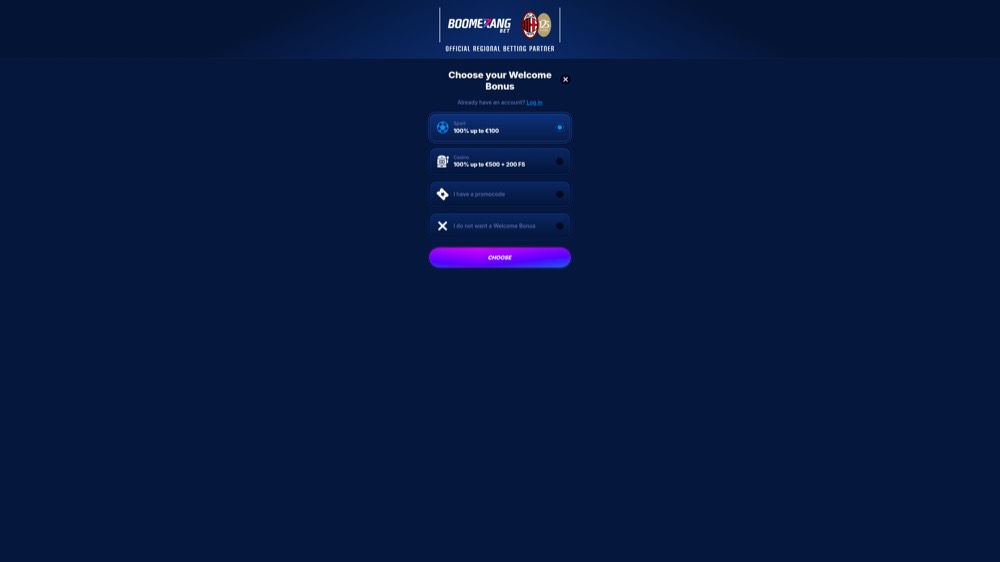
Boomerang Bet is a slick, feature-rich operator that impresses with a broad sportsbook and a strong casino crossover. Its generous welcome package and smooth mobile experience make it a standout pick for Luxembourg players comfortable with an internationally licensed brand.
Pros
- ✓Generous welcome bonus for new players
- ✓Wide sports and casino selection under one roof
- ✓Fast, intuitive mobile and desktop interface
Cons
- ✕Holds an international licence, not a Luxembourg (Loterie Nationale) licence
- ✕Bonus terms and wagering conditions should be read carefully before opting in
Bonus
100% up to €500

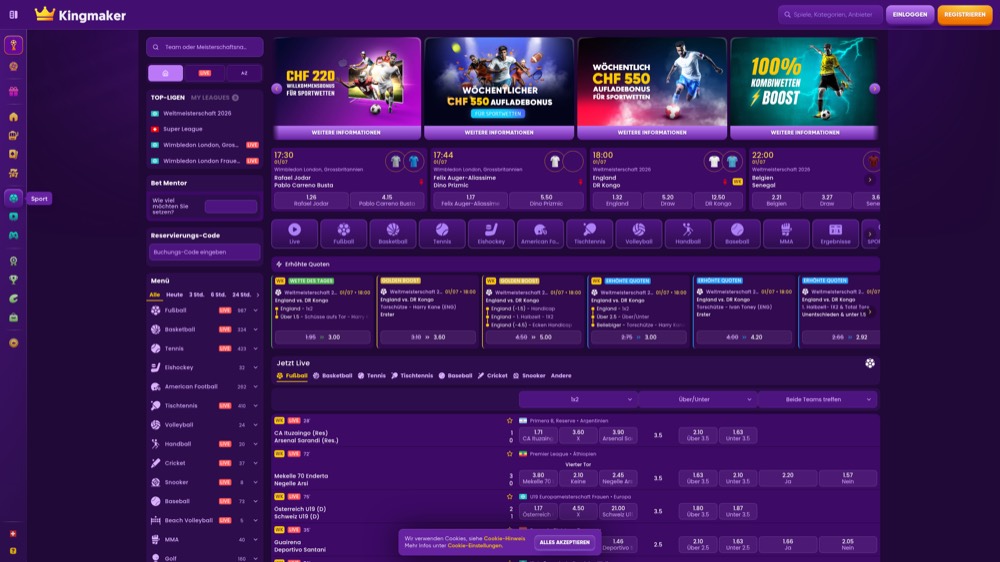
Kingmaker earns one of our highest editorial scores thanks to its slick sportsbook, deep market coverage and a welcome offer that gives new bettors plenty to work with. As an internationally licensed operator, it's built for players who want variety and competitive value.
Pros
- ✓Excellent all-round sportsbook experience
- ✓Generous sports welcome bonus for new customers
- ✓Broad range of markets and betting options
Cons
- ✕Holds an international licence, not regulated by Luxembourg's Loterie Nationale
- ✕Bonus terms and conditions apply
Bonus
€100 Sports Welcome Bonus


OnlySpins earns one of our highest editorial scores thanks to a slick, slots-focused platform and a straightforward welcome offer for new players. It's a strong all-round pick for Luxembourg players comfortable with an internationally licensed operator. Just be aware it isn't regulated by Luxembourg's Loterie Nationale.
Pros
- ✓Generous 100% welcome bonus up to €100
- ✓Slick, slots-focused platform
- ✓Smooth EUR payments
Cons
- ✕Holds an international licence, not a Luxembourg one
- ✕Bonus comes with wagering terms to check
Bonus
100% up to €100
FAQ
What does Over 2.5 goals mean?+
It means you're betting that three or more goals will be scored in total by both teams combined. If the match finishes with three, four or more goals you win; if it ends with two or fewer goals, the Over 2.5 bet loses.
What happens if the total lands exactly on the line?+
On a half-goal or half-point line (like 2.5) there's no tie — the result is always clearly over or under. On a whole-number line (like 3.0), landing exactly on the number is a push, and your stake is refunded.
Are Over or Under bets easier to win?+
Neither is inherently easier. The bookmaker sets the line to balance money on both sides and adds a margin, so long-term profit comes from spotting mispriced lines — using context like tempo, weather, injuries and motivation — rather than always favouring one side.
Can I bet Over/Under on sports other than football?+
Yes. Totals exist in basketball (points), American football, ice hockey and handball (goals/points), tennis (games or sets), MMA (rounds) and even esports (map or statistical totals). The principle is identical; only the typical numbers change.
Which licence should a Luxembourg bettor look for?+
Of the four frameworks you'll commonly see, the Malta Gaming Authority (MGA) offers the strongest player protection and dispute resolution. Curaçao is common and moderate, while Anjouan and Kahnawake are more permissive with fewer safeguards. Check the footer before depositing.
Are totals bonuses shown in euros?+
Yes, bonuses offered to Luxembourg players are displayed in EUR. Just make sure you're using a sports welcome offer for sports betting rather than a casino bonus, since their wagering terms, minimum odds and eligible markets differ significantly.
18+ · Affiliate link · Play responsibly