
Betting Guides
Tennis Betting Guide: Markets, Surfaces & Live Tips
A complete tennis betting guide for Luxembourg bettors: match winner, set betting, games handicap, surface and form factors, plus practical live betting tips.
Top betting sites for Luxembourg
Contains affiliate links · Operators’ terms and wagering requirements apply · More under Transparency & Funding.
Why Tennis Is One of the Best Sports to Bet On
Tennis is a purist’s betting sport. There are no teammates to hide behind, no draws to complicate the outcome, and a huge volume of matches across the ATP, WTA, Challenger and ITF tours almost every week of the year. For Luxembourg bettors weighing up their options alongside football betting or basketball betting, tennis offers something rare: a two-outcome sport with deep, structured markets and constant live action.
A Sport Built for Betting
Because a tennis match is essentially a series of one-on-one duels, the maths is cleaner than in team sports. A single break of serve can swing a set, and a single set can swing a match. That volatility is exactly what makes tennis both exciting and, if you are disciplined, potentially rewarding.
What This Guide Covers
Below we break down the core markets — match winner, set betting and games handicap — then explain how surface, form and fitness shape prices. We finish with practical live betting tactics. Throughout, the emphasis is on understanding why a price is what it is, not chasing guaranteed wins. This is entertainment: bet only what you can afford to lose, and always play at 18+.
The Core Tennis Betting Markets
Before you place a bet, it helps to know the building blocks. Most operators offer the same spine of tennis markets, with the depth varying by tournament tier.
Match Winner (Moneyline)
The simplest market: pick the player who wins the match. In Grand Slams the men play best-of-five sets, while women — and most other men’s events — play best-of-three. Best-of-five reduces variance, meaning the stronger player wins more often, so favourites tend to be shorter-priced at Slams.
Match-winner odds already bake in surface, form and head-to-head. A heavy favourite at 1.15 gives you little room for error, so many bettors look to combine matches into an accumulator or explore alternative markets for better value.
Set Betting (Correct Score in Sets)
Set betting asks you to predict the exact set scoreline — for example 2–0, 2–1 (best-of-three) or 3–1, 3–2 (best-of-five). It pays far more than the match-winner market because you must be right about both who wins and how comfortably.
A common approach is backing a strong favourite to win in straight sets (2–0 or 3–0) when facing a clearly weaker or out-of-form opponent. The reward is higher odds; the risk is that a single dropped set busts the bet.
Games and Set Handicaps
Handicaps level the playing field between mismatched players. There are two main flavours:
- Games handicap: e.g. Player A −4.5 games means they must win by five or more games across the match.
- Set handicap: e.g. Player A −1.5 sets means they must win 2–0 (or 3–0/3–1 in a Slam depending on the line).
Handicaps are the tennis cousin of handicap betting in team sports, and they are ideal when you fancy a favourite but the outright price is too short.
Totals: Over/Under Games
The total games market works like over/under elsewhere. You bet on whether the combined games in the match will go above or below a set line. Big-serving matchups on fast courts tend to produce more games (and more tie-breaks), while grinding baseline duels on slow surfaces can too — for different reasons.
First-Set and In-Match Angles
The first set is a market of its own — first-set winner and first-set totals. Because early breaks are decisive, the opening set often carries a different rhythm to the rest of the match. Some bettors focus on first-set totals as a lower-variance angle, betting on how many games the opening set will contain rather than trying to call the entire match.
| Market | What you predict | Typical risk | Best for |
|---|---|---|---|
| Match winner | Who wins | Low–medium | Confident picks, favourites |
| Set betting | Exact set score | High | Value on clear mismatches |
| Games handicap | Margin in games | Medium | Backing favourites at better odds |
| Over/Under games | Total games | Medium | Serve-based or grind matchups |
| First set | Opening-set outcome/total | Medium | Live and pre-match rhythm plays |
Surface: The Single Biggest Variable
If you learn one thing about tennis betting, make it this: surface changes everything. Players who dominate on one court can look ordinary on another.
Clay, Grass and Hard Courts
- Clay (e.g. Roland Garros) is slow. Rallies are long, points are physical, and heavy topspin players thrive. Serve advantage is reduced, so breaks are more frequent.
- Grass (e.g. Wimbledon) is fast and low-bouncing. It rewards big servers and aggressive net play. Holds of serve are common, tie-breaks frequent.
- Hard courts (e.g. US and Australian Opens) sit in between, though speeds vary by venue. They tend to favour balanced all-court players.
Why Surface Specialists Exist
Some players build their whole careers on one surface. A clay-court specialist may be a short price in Monte Carlo but drift dramatically at Wimbledon. Always check a player’s surface-specific record — not just their overall ranking — before betting.
Matching Markets to Surface
Fast grass and quick hard courts often favour over on games totals and set-based markets that reward serve dominance. Slow clay can favour handicaps on the superior mover and, occasionally, unders when one player breaks repeatedly and closes sets quickly. Context matters more than any rule of thumb.
Form, Fitness and Situational Factors
Odds shift on more than surface. The best tennis bettors read the situation around the match.
Recent Form vs Long-Term Class
A top-20 player returning from injury may carry a big reputation but shaky match sharpness. Conversely, a lower-ranked player on a deep tournament run can be riding genuine confidence. Weigh recent match results against underlying quality, and be wary of prices that reflect the name rather than the current form.
Fatigue and the Schedule
Tennis is brutal on the body. A player who won a three-set war the previous day, or came through qualifying, may have less in the tank. In best-of-five Slams, fatigue compounds over a fortnight. Back-to-back tournaments, long-haul travel and time-zone changes all matter.
Head-to-Head and Playing Styles
Some matchups are stylistic nightmares. A flat, hard-hitting returner can neutralise a big server; a relentless retriever can frustrate an aggressor. Head-to-head records — especially on the current surface — often reveal patterns that raw rankings miss.
Motivation and Conditions
Not every match carries equal weight. Early-round meetings in minor events, dead rubbers, or a player already qualified for a bigger goal can dampen intensity. Weather also counts: wind and heat degrade timing and stamina, indoor courts remove those variables. Factor conditions into totals and handicap bets especially.
Live Betting Tennis: Reading the Momentum
Tennis is arguably the best sport for live betting. Points come quickly, momentum is visible, and prices move constantly — giving alert bettors regular opportunities.
Break Points Are Everything
Serve is king. When a favourite drops serve early, their live match-winner price can balloon even though they remain the better player. If you believe the break was a blip rather than a collapse, that swing can offer value. Equally, an underdog who saves multiple break points may be genuinely rising to the occasion.
Watch, Don’t Just Read the Score
The scoreline lies. A player can lose a set 6–4 while creating far more chances than their opponent. Watching the match — body language, movement, second-serve quality — tells you more than the numbers alone. Never chase a live bet on emotion after a bad point.
Using Cash Out Wisely
Most live markets support cash out, letting you lock in a profit or cut a loss before the match ends. It is a useful risk-management tool — for instance, banking a return when your player leads by a set and a break — but the operator builds a margin into every cash-out figure. Treat it as a decision, not a reflex.
Live Totals and In-Play Handicaps
As a match unfolds, live over/under and handicap lines reset. If a set has been tight with several deuce games, the remaining totals may offer better numbers than the pre-match price. This is where combining surface knowledge with real-time observation pays off.
Building a Sensible Betting Approach
Markets and reads only work if the money behind them is managed well.
Bankroll First
Set a budget you can comfortably lose and stake a small, consistent percentage per bet. Sound bankroll management is what keeps you in the game through the inevitable losing runs — and tennis, with its upsets, will hand you plenty. Avoid chasing losses.
Hunt for Value, Not Winners
The goal is not to pick the most winners; it is to back prices that are longer than the true probability. That is the essence of value betting. Sometimes the smart bet is on the underdog, sometimes on a handicap rather than the outright.
Explore Other Sports Too
If you enjoy the one-on-one dynamic of tennis, you may also like MMA & UFC, golf or Formula 1. Team-sport fans can carry the same principles into ice hockey, handball, American football or esports. Our full tennis betting hub covers tournament-specific angles too.
Licensing and Playing Safely from Luxembourg
Online gambling in Luxembourg is a state monopoly run by the Loterie Nationale, so in practice Luxembourg bettors who want tennis markets and welcome offers use internationally licensed operators that accept them. Understanding the licence behind a site matters, because it determines your level of protection.
The Four Frameworks You’ll Encounter
| Licence | Strictness | Player protection |
|---|---|---|
| Malta Gaming Authority (MGA) | High | Strong rules on funds, fairness and dispute handling; EU-based |
| Curaçao | Moderate | Widely used, lighter oversight; recently reforming |
| Anjouan | Low | More permissive, newer, limited recourse |
| Kahnawake | Low–moderate | Long-established but permissive, limited enforcement |
MGA is generally the strictest and most player-friendly of the four. Curaçao is the most common and sits in the middle. Anjouan and Kahnawake are more permissive frameworks that are increasingly used by newer sites — they can offer generous promotions but typically provide weaker dispute resolution, so read terms carefully before depositing.
Bonuses: Sports vs Casino
Any welcome offer shown to you as a Luxembourg player will be in EUR (€). Be clear about what you are claiming: a sports welcome bonus (which you’d use on tennis and other markets) is distinct from a casino offer, and each has its own wagering requirements, minimum odds and time limits. We don’t quote specific figures here because they change constantly by operator — always read the full terms before opting in.
Responsible Gambling Comes First
Betting should be fun, never a way to make money or solve financial problems. Set deposit and time limits, take breaks, and never bet under pressure. You must be 18 or over. If gambling stops feeling like entertainment, seek support and consider self-exclusion tools. For free, confidential help and advice, visit begambleaware.org.
Our top picks reviewed

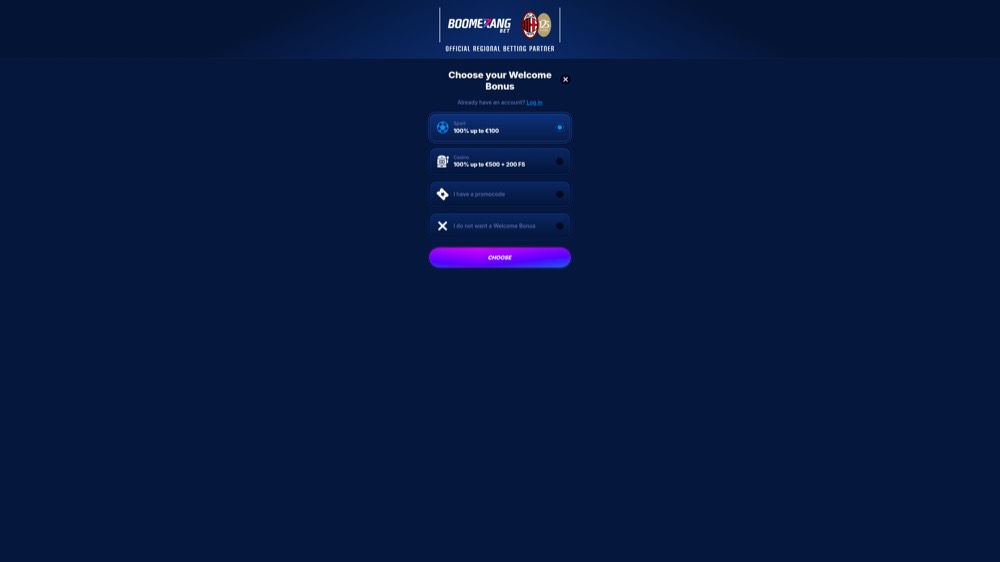
Boomerang Bet is a slick, feature-rich operator that impresses with a broad sportsbook and a strong casino crossover. Its generous welcome package and smooth mobile experience make it a standout pick for Luxembourg players comfortable with an internationally licensed brand.
Pros
- ✓Generous welcome bonus for new players
- ✓Wide sports and casino selection under one roof
- ✓Fast, intuitive mobile and desktop interface
Cons
- ✕Holds an international licence, not a Luxembourg (Loterie Nationale) licence
- ✕Bonus terms and wagering conditions should be read carefully before opting in
Bonus
100% up to €500

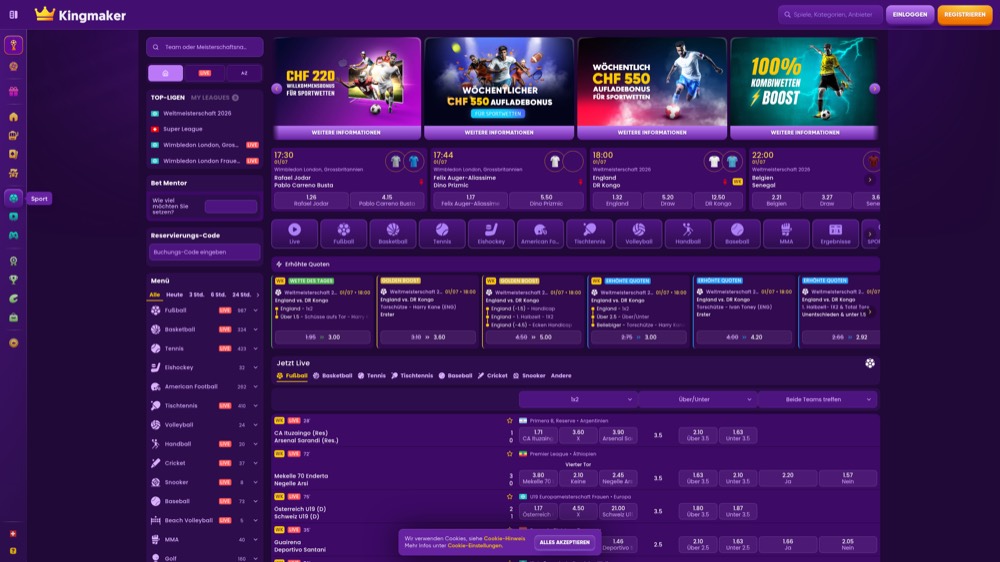
Kingmaker earns one of our highest editorial scores thanks to its slick sportsbook, deep market coverage and a welcome offer that gives new bettors plenty to work with. As an internationally licensed operator, it's built for players who want variety and competitive value.
Pros
- ✓Excellent all-round sportsbook experience
- ✓Generous sports welcome bonus for new customers
- ✓Broad range of markets and betting options
Cons
- ✕Holds an international licence, not regulated by Luxembourg's Loterie Nationale
- ✕Bonus terms and conditions apply
Bonus
€100 Sports Welcome Bonus

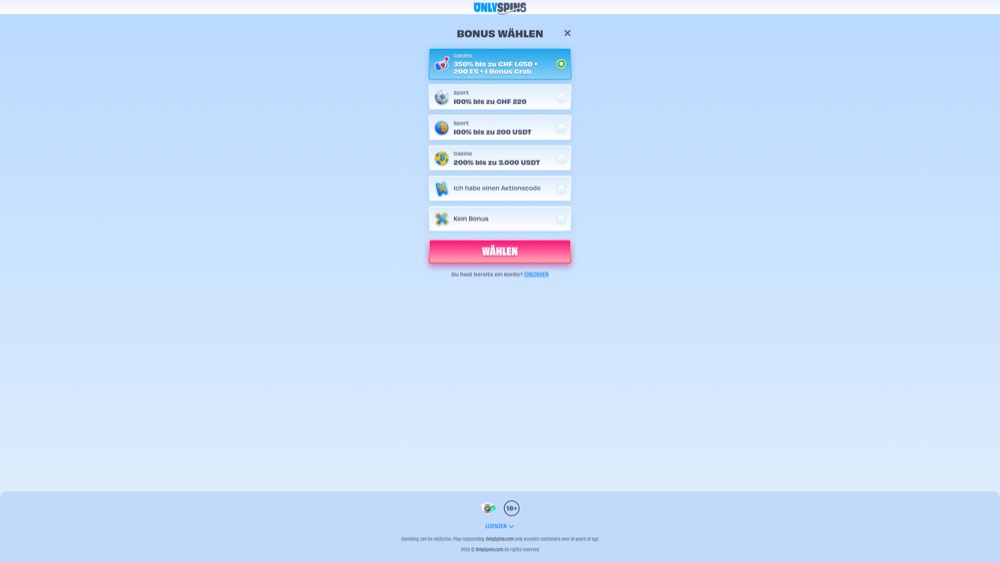
OnlySpins earns one of our highest editorial scores thanks to a slick, slots-focused platform and a straightforward welcome offer for new players. It's a strong all-round pick for Luxembourg players comfortable with an internationally licensed operator. Just be aware it isn't regulated by Luxembourg's Loterie Nationale.
Pros
- ✓Generous 100% welcome bonus up to €100
- ✓Slick, slots-focused platform
- ✓Smooth EUR payments
Cons
- ✕Holds an international licence, not a Luxembourg one
- ✕Bonus comes with wagering terms to check
Bonus
100% up to €100
FAQ
What is the easiest tennis market for beginners?+
The match-winner (moneyline) market is the simplest — you just pick who wins. It's a good starting point before moving on to set betting, games handicaps or totals, which require you to be right about the margin as well as the outcome.
Why does the court surface matter so much in tennis betting?+
Surface dictates speed and bounce, which suits different playing styles. Grass and fast hard courts reward big servers, while slow clay favours physical baseliners. A player's surface-specific record often tells you far more than their overall ranking.
What's the difference between a set handicap and a games handicap?+
A set handicap (e.g. −1.5 sets) requires a player to win by a set margin, such as 2–0. A games handicap (e.g. −4.5 games) is based on the total games won across the match. Games handicaps are more granular and often used to get better odds on a favourite.
Is live betting good for tennis?+
Yes. Tennis is one of the best sports for in-play betting because momentum swings on breaks of serve and prices move constantly. Watching the match — not just the score — helps you judge whether a swing reflects real trouble or a temporary blip.
Which licence should I look for as a Luxembourg player?+
Because online gambling in Luxembourg is a state monopoly, most players use internationally licensed sites. The Malta Gaming Authority (MGA) offers the strongest protection, Curaçao is common with moderate oversight, while Anjouan and Kahnawake are more permissive with weaker recourse. Always check the licence before depositing.
Are sports and casino welcome bonuses the same?+
No. A sports welcome bonus applies to markets like tennis, while a casino offer is separate, each with its own wagering requirements, minimum odds and time limits. Any bonus shown to you in Luxembourg is in EUR — always read the full terms before opting in.
18+ · Affiliate link · Play responsibly